

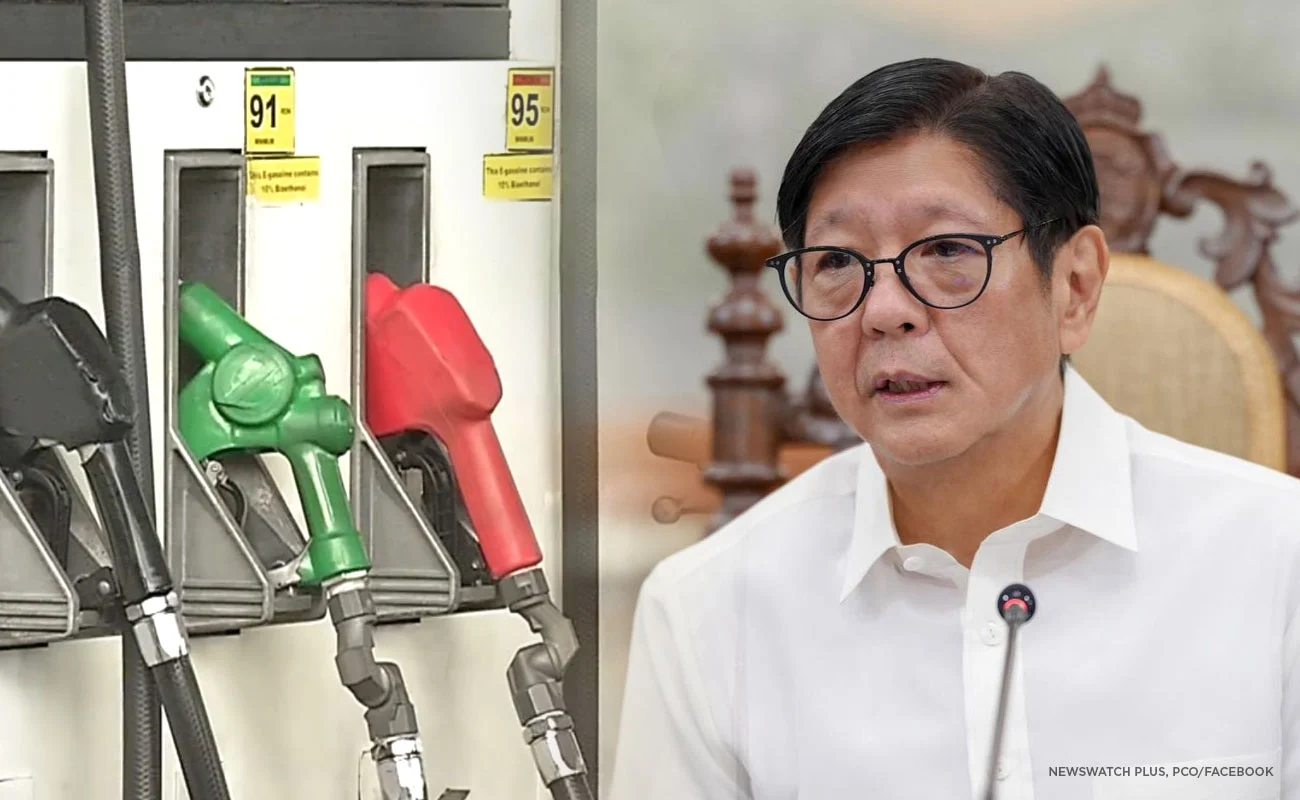

Metro Manila, Philippines – The House committee on ways and means has approved a bill granting President Bongbong Marcos powers to reduce or suspend fuel excise tax during national or global emergencies, in light of the Middle East crisis that spurred higher pump prices.
On Tuesday, March 10, the committee adopted the still unnumbered substitute bill, mostly from the version filed by House Speaker Bojie Dy and Majority Leader Sandro Marcos.
The bill stated that the president can remove or suspend fuel excise tax on the following conditions:
- When the average Dubai crude oil based on Mean of Platts Singapore has reached or exceeded $80 per barrel for one month immediately preceding the suspension or reduction order
- When a state of national emergency or calamity has been declared by the president and such conditions resulted in extraordinary increases in domestic fuel prices
Should the measure pass into law, it would authorize Marcos to remove or suspend excise tax on petroleum products within six months.
The measure said the president can exercise his power until December 31, 2028.
Marikina Rep. Miro Quimbo, panel chairperson, said Congress has the option to extend it for a year or terminate it within the six-month period should the suspension be deemed unnecessary.
“Kailangan ng executive na mag-report din sa atin once the suspension takes place para ipaliwanag na magkano ba ang mawawala na projected revenue. Pangalawa, ano ang magiging effect sa iba’t ibang economic indicators like inflation, budget deficit at lahat,” he said in an interview.
[Translation: The executive department should also report to us once the suspension takes place to explain how much projected revenue will be lost. Second, they should discuss what the effects will be on various economic indicators, such as inflation, the budget deficit, and others.]
Quimbo said the bill will be taken up for second reading at the plenary on Tuesday afternoon.
He noted that the House has yet to receive a certification from the Palace to place the bill as urgent.
Beginning Tuesday, oil firms are carrying out staggered price hikes this week within a range of ₱17.50 per liter to ₱24.25 per liter for diesel, ₱7 to ₱13 for gasoline, and ₱32 to ₱38.50 for kerosene.
Suspension effects not immediate
During the inquiry, the Department of Energy (DOE) and oil firms clarified the potential reduction or suspension of excise tax does not mean fuel prices would go down immediately.
Tanya Samillano, a representative for the Independent Petroleum Companies Association, said the excise tax of the current fuel stocks have already been paid, as a matter of industry practice.
“The moment it reached the shores of the Philippines, the taxes and duties had already been settled. When you pass it today, the inventory tomorrow still has the paid excise. ‘Yung padating pa lang bukas, iyon ang wala [the one that may arrive tomorrow, that won’t be taxed yet],” she told lawmakers.
Myra Fiera Roa, DOE assistant secretary, agreed, saying the effect of the possible tax relief would only reflect on the new inventory.
In a chance interview, Quimbo suggested imposing tax credits on oil firms as a compensation, if it means selling fuel at a lower price.
The government earlier said per liter prices of diesel and gasoline may go down by P6 and P10 respectively, if excise tax is removed.
“Kung magkano man ang binayad nila, iyon ang tatanggapin ng gobyerno once the suspension is already terminated. So hindi na muna kayo magbabayad kasi may credit kayo sa amin, dahil nakapagbayad na kayo noon pero hindi niyo nakolekta o naipasa sa consumer,” Quimbo said.
[Translation: Whatever amount they paid will be accepted by the government once the suspension is already terminated. So companies will not need to pay for the meantime because you have a credit with us, since you already paid before but were not able to collect or pass it on to the consumer.]
Marcos’ economic team earlier said suspending fuel excise taxes from May to December alone could result in about P136 billion in foregone revenues.